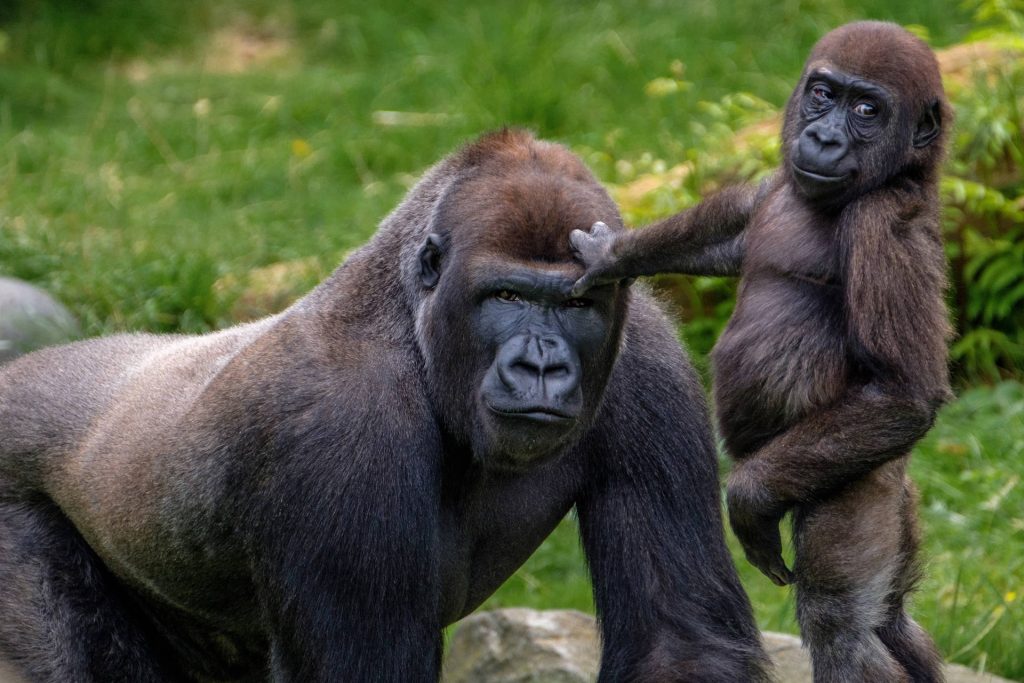
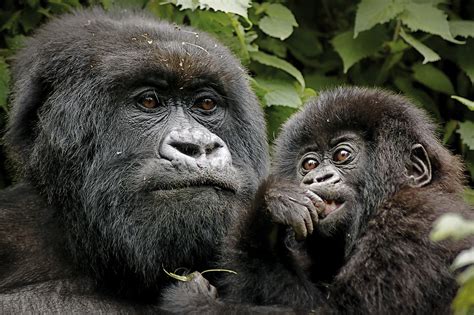
The world population of mountain gorillas is currently estimated to be at around 1000 individuals. In Virunga’s southern sector around Bukima, there are currently ten habituated gorilla families and four solitary males which are also habituated, meaning that they are unafraid of human presence.
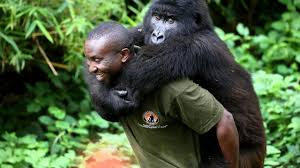
The habituation process is done by researchers and rangers who visit the gorillas on a daily basis for between two and three years until the gorillas are comfortable having people near them. Habituation is a critical component of gorilla conservation, as it allows for detailed research to be undertaken on the species. This helps to increase understanding of mountain gorilla behaviour, as well as allowing veterinary teams to intervene if gorillas are injured or showing signs of ill health.
Silverback Gorillas
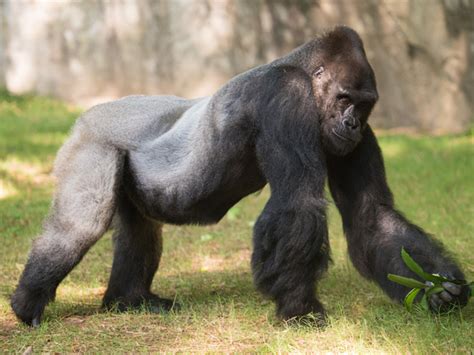
A silverback mountain gorilla is an adult male identifiable by the swathe of silver hair on its back. As well as this impressive signifier of maturity, they are famed for displays of aggression and dominance including whooping, charging, chest beating, tree slapping, and less commonly, physical duels.
A typical silverback weighs 430 pounds (195 kg) and stands 5 feet (1.5m) tall. Silverbacks are incredibly strong and can lift over 1763 pounds (800kg) of dead weight. That’s roughly twice as much as a well trained weightlifter. In the wild, a silverback uses its immense strength to fell trees in order to reach their fruits. This makes mountain gorillas a keystone species in Virunga, since they significantly affect the ecology of their environment.
Conversation
At a time when the world’s biodiversity is suffering widespread decline, especially in the tropics, the protection of mountain gorillas and increase in their population represent a rare success story. This accomplishment arises from intense collaboration between state actors, civil society, and the private sector in the three countries where the primate is native: The Democratic Republic of Congo (DRC), Uganda, and Rwanda. At the heart of conservation efforts is the tireless work of more than a thousand park Rangers, who for 40 years have enabled close daily monitoring of the species, even in the midst of the region’s most violent events.